
10 Powerful H1B Visa Benefits: Avoid Costly Immigration Mistakes and Build Your U.S. Career
Introduction
The h1b visa remains one of the most sought-after employment-based visas in the United States. Every year, thousands of skilled professionals from around the world pursue an h1b visa to work for U.S. employers in specialized occupations. Whether you are an engineer, IT professional, healthcare specialist, accountant, financial analyst, or researcher, the h1b visa can provide valuable opportunities for career growth and long-term immigration planning.
Despite its popularity, the h1b visa process can be complex and competitive. Strict eligibility requirements, annual lottery selections, employer sponsorship obligations, and evolving immigration regulations often create confusion for both employers and applicants.
Understanding the h1b visa process is essential for increasing your chances of success and avoiding costly mistakes that can delay or jeopardize your application. In this comprehensive guide, we’ll explore the benefits, requirements, application procedures, common challenges, and best practices associated with the h1b visa.
Whether you’re an international professional seeking employment opportunities or a U.S. employer looking to hire global talent, this article provides valuable insights into the h1b visa process.
What Is an H1B Visa?
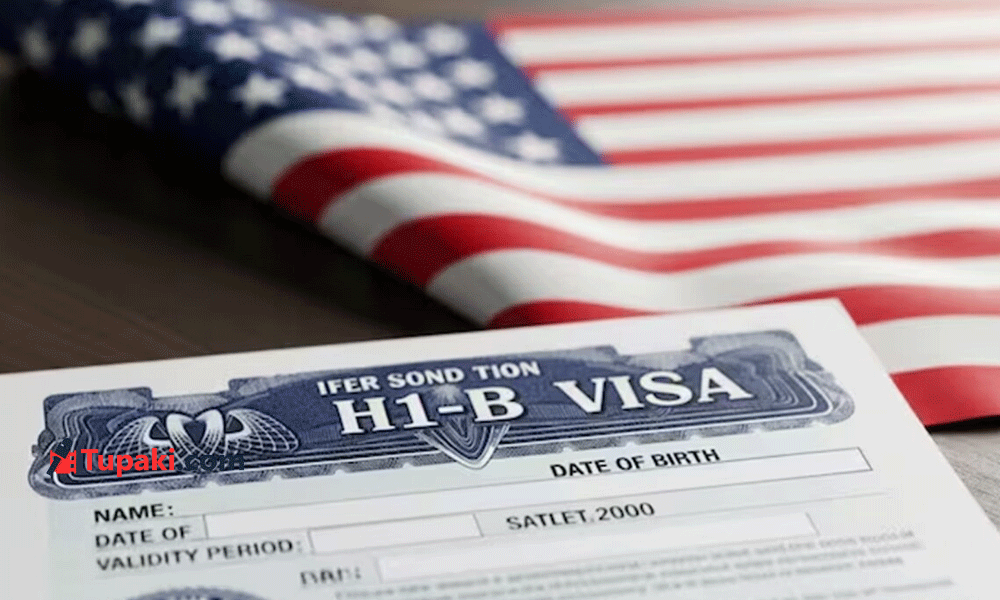
The h1b visa is a nonimmigrant work visa that allows U.S. employers to temporarily employ foreign professionals in specialty occupations.
Specialty occupations generally require:
- Specialized knowledge
- A bachelor’s degree or higher
- Professional expertise in a specific field
Common industries that frequently utilize the h1b visa include:
| Industry | Examples |
|---|---|
| Information Technology | Software developers, engineers |
| Healthcare | Physicians, medical researchers |
| Finance | Financial analysts, accountants |
| Engineering | Mechanical, civil, electrical engineers |
| Education | Professors and researchers |
| Biotechnology | Scientists and specialists |
The h1b visa enables U.S. businesses to access highly skilled talent when qualified domestic workers may not be readily available.
Why the H1B Visa Is So Popular
The h1b visa has become one of the most recognized pathways for skilled foreign professionals seeking employment in the United States.
Career Growth Opportunities
An h1b visa allows professionals to gain valuable experience with leading American companies and organizations.
Competitive Compensation
Many jobs sponsored through an h1b visa offer competitive salaries and benefits.
Access to Global Employers
Some of the world’s largest technology, healthcare, financial, and engineering companies regularly sponsor h1b visa candidates.
Family Benefits
The h1b visa often allows spouses and dependent children to accompany the principal applicant under H-4 status.
Potential Pathway to Permanent Residency
For many individuals, the h1b visa serves as a stepping stone toward employment-based permanent residency in the United States.
H1B Visa Eligibility Requirements
Meeting eligibility requirements is critical for obtaining an h1b visa.
Specialty Occupation Requirement
The position must qualify as a specialty occupation requiring specialized knowledge.
Educational Qualifications
Most applicants must possess at least a bachelor’s degree or its equivalent in a relevant field.
Employer Sponsorship
A valid h1b visa petition requires sponsorship from a U.S. employer.
Labor Condition Application
Employers must obtain certification through a Labor Condition Application (LCA) before filing an h1b visa petition.
Employer-Employee Relationship
The sponsoring organization must establish a legitimate employer-employee relationship with the applicant.
Failure to satisfy any of these requirements can result in denial of an h1b visa petition.
Understanding the H1B Visa Lottery Process
One of the most challenging aspects of the h1b visa system is the annual lottery process.
Because demand often exceeds available visa numbers, the government conducts a lottery to select eligible registrations.
Annual Cap
The standard annual h1b visa cap includes:
- 65,000 regular cap visas
- 20,000 additional visas for advanced degree holders
Registration Process
Employers must electronically register potential h1b visa candidates during the designated registration period.
Lottery Selection
Eligible registrations are entered into a random selection process.
Petition Filing
If selected, employers may proceed with submitting a complete h1b visa petition.
Due to intense competition, lottery selection remains one of the most unpredictable aspects of the h1b visa process.
Step-by-Step H1B Visa Application Process
The h1b visa process involves several important stages.
Step 1: Secure Employer Sponsorship
The applicant must first obtain a job offer from a qualified U.S. employer willing to sponsor an h1b visa.
Step 2: Labor Condition Application
The employer files a Labor Condition Application with the Department of Labor.
Step 3: Lottery Registration
The employer submits the candidate’s registration during the annual h-1b visa registration period.
Step 4: Petition Preparation
If selected, the employer prepares the complete h-1b visa petition package.
Step 5: USCIS Review
Immigration authorities review the submitted h-1b visa petition.
Step 6: Visa Issuance
If approved, the applicant may proceed with visa issuance and employment authorization procedures.
Careful attention to each stage can significantly improve h-1b visa success rates.
Common H-1B Visa Mistakes to Avoid
Many applicants and employers encounter preventable issues during the h-1b visa process.
Incomplete Documentation
Missing supporting evidence often results in delays or requests for additional information.
Incorrect Job Classification
Improperly classifying a position may create problems during h-1b visa adjudication.
Failure to Meet Degree Requirements
Educational qualifications must align with the specialty occupation.
Employer Compliance Issues
Employers sponsoring an h-1b visa must comply with wage and labor regulations.
Missing Deadlines
Late submissions can eliminate opportunities for participation in the annual h-1b visa cycle.
Avoiding these mistakes helps reduce risks and improve application outcomes.
H-1B Visa Benefits for Employers
The h-1b visa offers significant advantages for U.S. employers.
Access to Global Talent
Organizations can recruit highly skilled professionals worldwide.
Innovation and Growth
Many industries depend on h-1b visa professionals to drive innovation and business expansion.
Workforce Flexibility
The h-1b visa enables employers to address specialized workforce needs.
Competitive Advantage
Access to specialized talent helps businesses remain competitive in global markets.
Employers that effectively utilize the h-1b visa program often strengthen their long-term growth strategies.
H-1B Visa Extensions and Long-Term Planning
The h-1b visa is generally granted for an initial period of up to three years.
Extension Opportunities
Many professionals qualify for h-1b visa extensions, allowing continued employment.
Green Card Sponsorship
Employers frequently sponsor permanent residency for workers holding an h-1b visa.
Career Advancement
The h-1b visa often creates opportunities for promotions, leadership roles, and professional development.
Family Stability
Long-term immigration planning through an h-1b visa can support family relocation and stability.
Strategic planning is essential for maximizing the benefits of the h-1b visa.
Best Practices for H-1B Visa Success
Applicants and employers can improve outcomes by following proven strategies.
Start Early
Begin preparing for the h-1b visa process well before registration periods open.
Maintain Accurate Records
Keep educational, employment, and immigration documentation organized.
Work With Qualified Professionals
Experienced immigration professionals can help navigate the complexities of the h-1b visa process.
Monitor Regulatory Updates
Immigration regulations affecting the h-1b visa may change periodically.
Ensure Compliance
Employers must maintain compliance with all labor and immigration requirements.
Following these practices can significantly strengthen an h-1b visa case.
Frequently Asked Questions
What is an h-1b visa?
An h-1b visa is a nonimmigrant work visa that allows U.S. employers to hire foreign professionals in specialty occupations.
Who qualifies for an h-1b visa?
Individuals with specialized knowledge and qualifying educational credentials may qualify for an h-1b visa if sponsored by a U.S. employer.
Is the h-1b visa subject to a lottery?
Yes. Most h-1b visa petitions are subject to an annual lottery due to high demand.
How long is an h-1b visa valid?
An h-1b visa is typically granted for up to three years and may be extended under certain circumstances.
Can h-1b visa holders apply for a green card?
Yes. Many individuals use the h-1b visa as a pathway toward employment-based permanent residency.
Can family members accompany h-1b visa holders?
Yes. Spouses and dependent children may generally qualify for H-4 status.
What happens if an h-1b visa petition is denied?
Applicants may explore alternative immigration options or reapply if eligible.
Conclusion
The h-1b visa continues to play a vital role in connecting talented professionals with employment opportunities throughout the United States. For employers, the program provides access to specialized expertise that supports innovation and growth. For skilled workers, the h-1b visa offers valuable career opportunities, professional advancement, and potential pathways to long-term immigration goals.
Although the h-1b visa process can be competitive and complex, careful planning, accurate documentation, employer compliance, and professional guidance can greatly improve the likelihood of success.
At SM Professional Services, we assist individuals and employers with immigration-related matters, helping clients navigate the complexities of the h-1b visa process with confidence and clarity. Whether you’re exploring employment opportunities or seeking sponsorship solutions, our team is committed to supporting your immigration journey every step of the way.